Seven Costs Missing From a Software Price Page
The monthly fee is the part everyone compares. These seven costs rarely appear on the pricing page and often decide whether a tool is a bargain or a burden.
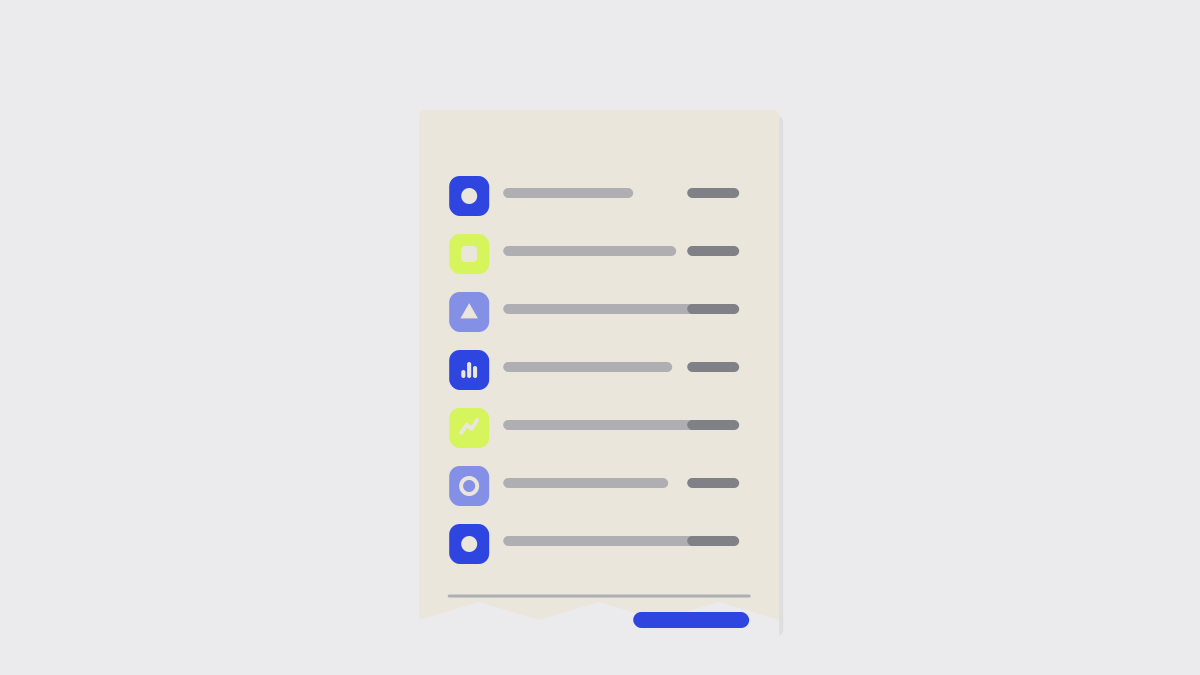
When you compare two tools by their monthly fee, you are comparing the part of the cost that vendors want you to see. These are the others.
1. Setup and onboarding
Some vendors charge for setup, training or a data import. Others do it free but take weeks of your team's time. Either way it belongs in the budget.
2. Add-ons and usage limits
Storage, extra projects, API calls and automation runs are often capped. Check what happens when you reach the limit and what each extra block costs.
3. Integrations
A tool that does not connect to your accounting, email or calendar creates manual work, or needs a connector service that has its own fee.
4. Support
Cheaper plans often come with email-only support and slower response times. If an outage would stop you working, price in the tier with faster help.
5. Training time
Hours spent learning a tool are a cost, even if nobody sends an invoice. A cheaper tool that takes twice as long to learn is not cheaper.
6. Price rises
Check the contract for how and when prices can change. Many plans rise at renewal, sometimes sharply.
7. Leaving
Getting your data out can mean fees, export limits or a lot of manual clean-up. Ask before you sign.
The real cost of software is the fee plus everything the fee does not cover.
Keep reading
More from the Pricing desk
-
 Pricing
 Per-Seat Pricing, Explained: What You'll Really Pay at Ten Users
The price on the front page is per person, per month. The bill is rarely that simple once you add the tier you actually need, the extras and the people who only look in occasionally.
-
 Guides
 How to Switch Software Without Losing Your Data
Moving to a new tool is mostly a data problem. A clear plan, a trial run and a short overlap period make the switch far less risky than a single big cut-over.
-
 Reviews
 What to Test in a Free Trial Before You Pay
Most trials are wasted clicking around. A short plan, built from the jobs the tool must do for you, tells you in a week whether it deserves a place in the business.
Join the readership
Liked this? Let's connect.

We respect your privacy. One considered email each Thursday.